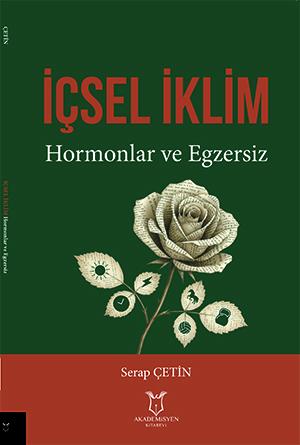
İçsel İklim Hormonlar ve Egzersiz
Özet
-
Referanslar
Sen S, Chakraborty R. The Role of Antioxidants in Human Health. In: Andreescu S, Hepel M, editors. Oxidative Stress: Diagnostics, Prevention, and Therapy; 2011. p. 1-37.
Reiter RJ. The mammalian pineal gland: Structure and function. Am J Anat.1981; 162(4): 287-313
Atasoy ÖB, Erbaş O. Melatonin hormonunun fizyolojik etkileri. FNG and Bilim Tıp Dergisi. 2017; 3(1): 52-62
Manchester LC, Coto-Montes A, Boga JA, Andersen LP, Zhou Z, Galano A, et al. Melatonin: An ancient molecule that makes oxygen metabolicall tolerable. J Pineal Res. 2015; 59(4): 403-19.
(Mete, 2013; Romano ve Lothian, 2008).
(Neumann 2007; Say ve Müjdeci, 2016).
Jobst A, Krause D, Maiwald C, Härtl K, Myint AM, Kästner R, et al. Oxytocin course over pregnancy and postpartum period and the association with postpartum depressive symptoms
Tuman TC. DSM-5 Kriterlerine göre tanı konan depresyon, yaygın anksiyete bozukluğu, sosyal anksiyete bozukluğu ve panik bozukluk hastalarında serum oksitosin düzeylerinin sağlıklı kontrollerle karşılaştırılması (Yayınlanmamış Tıpta Uzmanlık Tezi). Abant İzzet Baysal Üniversitesi Tıp Fakültesi Ruh Sağlığı ve Hastalıkları Anabilim Dalı, Bolu, 2015. p. 11-51.
Mete S. Stres, hormonlar ve doğum arasındaki ilişki. Dokuz Eylül Üniversitesi Hemşirelik Fakültesi Elektronik Dergi 2013;6(2):93-98.
Buckley SJ. Hormonal Physiology of Childbearing: Evidence and Implications for Women, Babies, and Maternity Care (2015). (http://www.nationalpartnership.org/ourwork/resources/health-care/maternity/hormonalphysiology-of-childbearing.pdf) adresinden 23.05.2020 tarihinde erişilmiştir.
Çelik vd., 2008.
Uzbay, 2006
Öztürk vd., 2007; Arkar, 2004
Sayar, 2010.
Kocatürk, 2000; Atıl, 2006.
Atıl, 2006.
Yurdakoş, 2001.
Balcıoğlu ve Savrun, 2001; Özata, 2012.
(Uzbay, 2006; Yemez ve Alptekin, 1998; Uğur, 2008; Madi, 2011).
Hamad AM, Clayton A, Islam B, Knox AJ. Guanylyl cyclases, nitric oxide, natriuretic peptides, and airway smooth muscle function. Am J Physiol Lung Cell Mol Physiol 2003;285:L973–L983.
Ishii J, Nomura M, Ito M, et al. Plasma concentration of brain natriuretic peptide as a biochemical marker for the evaluation of right ventricular overload and mortality in chronic respiratory disease. Clinica Chimica Acta 2000;301:19–30.
Murakami S, Nagaya N, Itoh T, et al. C-type natriuretic peptide attenuates bleomycin-induced
Rosenweig A, Seudeman CE. Atrial natriuretic factor and related peptide hormones. Annu Rev Biochem 1991;60:229-255
Bold AJ, Flynn TG. Cardionatrin I - a novel heart peptide with potent diuretic and natriuretic properties. Life Sci 1983;33:297-302.
Altınışık, 2009; McCance ve Shelby, 1994.
(T.C. Sağlık Bakanlığı Halk Sağlığı Genel Müdürlüğü 2018).
Schlechte J, Dolan K, Sherman B, Chapler F, Luciano A. The natural history of untreated hyperprolactinemia: a prospective analysis. J Clin Endocrinol Metab 1989; 68(2): 412-8.
Colao A. Pituitary tumours: the prolactinoma. Best Pract Res Clin Endocrinol Metab, 2009; 23: 575–96.
Ciccarelli A, Daly AF, Beckers A. The epidemiology of prolactinomas. Pituitary 2005; 8(1): 3-6.
Veldhuis JD, Johnson ML. Operating characteristics of the hypothalamo-pituitary-gonadal axis in men: circadian, ultradian, and pulsatile release of prolactin and its temporal coupling with luteinizing hormone. J Clin Endocrinol Metab. 1988; 67: 116-23.
Atıl, 2006; Ceylan ve diğerleri, 2002; Kılıç, Yaşar, Avcı, Demirel ve Yaşar, 2005; Naras, 2006; Yıldırım, 201).
Guyton ve Hall, 2001; Naras, 2006.
Atıl, 2006; George, Reler ve Lanese 1974; Yen ve Jaffe, 1986.
Kadowaki T, Yamauchi T, Kubota N, Hara K, Ueki K, Tobe K, et al. Adiponectin and adiponectin receptors in insulin resistance, diabetes, and the metabolic syndrome. The Journal of clinical investigation. 2006;116 (7):1784– 1792.
Kusminski CM, McTernan PG, Kumar S. Role of resistin in obesity, insulin resistance and Type II diabetes. Clin Sci (Lond). 2005;109:243-256.
Legakis I, Mantzouridis T, Bouboulis G, Chrousos GP. Reciprocal changes of serum adispin and visfatin levels in patients with type 2 diabetes after an overnight fast. Archives of endocrinology and metabolism, 2016;60 (1):76–78.
Yamauchi T, Kamon J, Waki H, Terauchi Y, Kubota N, Hara K, Mori Y, Ide T, Murakami K, Tsuboyama-Kasaoka N, Ezaki O, Akanuma Y, Gavrilova O, Vinson C, Reitman ML, Kagechika H, Shudo K, Yoda M, Nakano Y, Tobe K, Nagai R, Kimura S, Tomita M, Froguel P, Kadowaki T. The fat-derived hormone adiponectin reverses insulin resistance associated with both lipoatrophy and obesity. Nat Med. 2001;7(8):941-6.
Berg AH, Combs TP, Du XL, Brownlee M, Scherer PE. The adipocyte-secreted protein Acrp30 enhances hepatic insulin action. Nat Med. 2001;7(8):947-6
McEwen and Sapolsky (1995)
Miller ve ark. (2007)
Gustafsson (2010)
Pruessner (2005)
Kiecolt-Glaser ve ark. (2003)
Dantzer ve ark. (2008)
Miller ve Cole (2012)
Harvard Health Publishing. (2023). Revitalize your walking routine. Harvard Medical School.
Harvard Health Publishing. (2022). Will walking faster reduce your diabetes risk? Harvard Medical School.
Harvard Health Publishing. (2019). More evidence that exercise can boost mood. Harvard Medical School.
Cherry, K. (2023). What is serotonin? Verywell Mind.
Norwegian SciTech News. (2023). Seven weeks to reducing your belly fat. Norwegian University of Science and Technology.
Brobakken, M. F., Hjelmesæth, J., and Kolnes, A. J. (2023). Aerobic exercise reduces visceral adipose tissue: A 12-week intervention study. Frontiers in Endocrinology, 14, 10680576.
PhysioPedia. (2023). Exercise endocrine system interaction.
Koulouri, O., et al. (2024). Biomolecular mechanisms of cortisol in exercise metabolism. Biomolecules, 14(11), 1418.
Hackney, A. C., et al. (2021). Acute effect of HIIT on testosterone and cortisol levels in healthy individuals: A systematic review and meta-analysis. Journal of Strength and Conditioning Research. Advance online publication.
Dote-Montero, M., et al. (2021). Acute effect of HIIT on testosterone and cortisol levels in healthy individuals. Scandinavian Journal of Medicine and Science in Sports.
Ambroży, T., et al. (2021). The Effect of High-Intensity Interval Training Periods on Hormonal Responses. Frontiers in Physiology.
Peake, J. M., et al. (2014). Metabolic and hormonal responses to isoenergetic high-intensity interval and moderate-intensity continuous exercise. Am J Physiol Endocrinol Metab.
Godfrey, R. J., et al. (2009). The role of lactate in the exercise-induced human growth hormone response. Br J Sports Med.
Athanasiou, N., et al. (2022). Endocrine responses of the stress system to different types of exercise. Frontiers in Physiology.
Sato, S., et al. (2019). Chronobiology and Exercise: Timing Matters for Hormonal and Metabolic Responses. Journal of Sports Science and Medicine, 18, 123–134.
Atkinson, G., and Reilly, T. (1996). Circadian variation in sports performance. Sports Medicine, 21(4), 292–312.
Chtourou, H., and Souissi, N. (2012). The effect of training at a specific time of day on performance and hormonal responses. Chronobiology International, 29(3), 420–430.
Waterhouse, J., et al. (2007). Circadian rhythms, exercise, and performance. Chronobiology International, 24(2), 301–315.
Reilly, T., and Garhammer, J. (2011). Chronobiology in sports training and performance. Human Kinetics.
Meeusen, R., et al. (2013). Prevention, diagnosis, and treatment of the overtraining syndrome: Joint consensus statement of the European College of Sport Science and the American College of Sports Medicine. European Journal of Sport Science, 13(1), 1–24.
Hackney, A. C. (2006). Exercise as a stressor to the human neuroendocrine system. Hormones, 5(2),28-29
Urhausen, A., and Kindermann, W. (2002). Diagnosis of overtraining: What tools do we have? Sports Medicine, 32(2), 95–102.
Kraemer, W. J., and Ratamess, N. A. (2005). Hormonal responses and adaptations to resistance exercise and overtraining. Sports Medicine, 35(4), 339–361.
Lehmann, M., Foster, C., and Keul, J. (1993). Overtraining in endurance athletes: A brief review. Medicine and Science in Sports and Exercise, 25(7), 854–862.
Ershad, D. (2018). The Impact of Regular Exercise on Cortisol Rhythm Regulation. Stanford University, Department of Health and Human Performance.
Axelsson, J., Benedict, C., and Broman, J.E. (2008). Single night of sleep loss increases morning cortisol levels in young healthy men. Uppsala University, Department of Neuroscience. Journal of Clinical Endocrinology and Metabolism, 93(9), 3227–3231.
Hunter, M.C., Gillespie, B.W., and Chen, S.Y. (2019). Urban nature experiences reduce stress in the context of daily life: The role of cortisol. University of Michigan. Frontiers in Psychology, 10, 722.
Małkowska, J., et al. (2023). Effects of Regular Exercise on Pro- and Anti-Inflammatory Cytokines.
ATTICA Study. (2022). Physical Activity and Basal Cytokine Levels in Urban Populations.
Prokopchuk, I., et al. (2022). High-Intensity Exercise Increases Anti-Inflammatory Cytokines.
Sang, C., et al. (2023). Sleep Deprivation Induces Peripheral Cytokine Imbalance via PGD2.
Irwin, M., et al. (2006). Sleep Loss and Monocyte Pro-Inflammatory Cytokine Response.
Yu, H., et al. (2024). Anti-Inflammatory Diets and Biomarker Reduction.
Shin, S., et al. (2020). Traditional Korean Diet and Anti-Inflammatory Effects.
Mustafa Atasoy, Hormon: Menopoz Öncesi-Sonrası, 2019
Uplifers, Vücudumuzun Gizli Kahramanı: Endokrin Sistemi ile İlgili Bilmeniz Gereken Her Şey, 2018
Memorial Sağlık Grubu, Mutluluk Hormonu Nedir, 2024
Erken Menopoz, Menopozda Hormon Replasman Tedavisiyle İlgili Doğru Bilinen Yanlışlar, 2019
Khan Academy, Endokrin Bezleri ve Hormonlar, 2024
Sara Gottfried, Hormon Tedavisi, 2019
Atilla Büyükgebiz, Çocukların ve Yetişkinlerin Sağlığını Tehdit Eden Hormon Bozucular, 2022
Kassandra Friedrichs and Philipp Kellmeyer, Neurofeminism: Feminist Critiques of Research on Sex/Gender Differences in the Neurosciences, 2022
Salles, B. I. M. (2020). Probiotics supplementation and insulin resistance. PMC.
Liu, J. (2025). Gut microbiota and its metabolites regulate insulin resistance. Frontiers in Microbiology.
Burns, J. (2022). Common herbs for stress: The science and strategy of a balanced approach. PMC.
Owens, F. S. (2020). The effects of Moringa oleifera on blood glucose levels. PubMed.
Gudise, V. S. (2024). Efficacy and Safety of Shatavari Root Extract for the Management of Menopausal Symptoms. PMC.
Avis, N. E. (2016). Acupuncture in Menopause (AIM) Study: a Pragmatic, Randomized Controlled Trial. PM
Zhao, F. Y. (2021). Acupuncture: A Promising Approach for Comorbid Depression and Insomnia During Perimenopause. PMC.
Cummings DE, et al. Ghrelin and the regulation of appetite. Nature. 2001; 409: 321–327.
Zhang Y, et al. Positional cloning of the mouse obese gene and its human homologue. Nature. 1994; 372: 425–432.
Friedman JM. Leptin and the regulation of body weight. Keio J Med. 2016; 65(2): 19–24.
Saltiel AR, Kahn CR. Insulin signaling and the regulation of glucose and lipid metabolism. Nature. 2001; 414: 799–806.
McEwen BS. Stress, adaptation, and disease. Allostasis and allostatic load. Ann N Y Acad Sci. 1998; 840: 33–44.
Goldstein DS. Catecholamines and stress. Endocr Regul. 2010; 44(4): 195–203.
Hardeland R. Melatonin: signaling mechanisms, antioxidant and anti-inflammatory actions. J Pineal Res. 2012; 52: 114–133.
Siegel JM. Sleep mechanisms. Annu Rev Neurosci. 2005; 28: 557–579.
Wise RA. Dopamine, learning and motivation. Nat Rev Neurosci. 2004; 5: 483–494.
Boecker H, et al. The runner’s high: opioidergic mechanisms in the human brain. Cereb Cortex. 2008; 18: 2523–2531
Blundell, J.E., Appetite control and energy balance: impact of diet composition. Physiol Behav, 2015.
Cummings, D.E., Overduin, J., Gastrointestinal regulation of food intake. J Clin Invest, 2007.
Leptin and Ghrelin Reviews: Physiol Rev, 2014; Nat Rev Endocrinol, 2017.
McEwen, B.S., Protective and damaging effects of stress mediators. N Engl J Med, 1998.
Sapolsky, R.M., Why Zebras Don’t Get Ulcers, 3rd Edition, 2004.
Chrousos, G.P., Stress and disorders of the stress system. Nat Rev Endocrinol, 2009.
Spiegel, K., Tasali, E., Penev, P., Van Cauter, E., Sleep and metabolic function. PLoS Med, 2009.
Czeisler, C.A., et al., Circadian rhythms, sleep, and hormones. J Biol Rhythms, 2006.
Dijk, D.J., Archer, S.N., Light, sleep, and circadian rhythms: together again. Nat Rev Neurosci, 2009.
Young, S.N., How to increase serotonin in the human brain without drugs. J Psychiatry Neurosci, 2007.
Boecker, H., et al., The runner’s high: opioidergic mechanisms in the human brain. Cereb Cortex, 2008.
Volkow, N.D., et al., Dopamine and the brain’s reward system. Nat Rev Neurosci, 2011.
Kraemer, W.J., Ratamess, N.A., Hormonal responses and adaptations to resistance exercise and training. Sports Med, 2005.
Hackney, A.C., Exercise as a stressor to the human neuroendocrine system. Horm Metab Res, 2006.
Egan, B., Zierath, J.R., Exercise metabolism and the molecular regulation of skeletal muscle adaptation. Cell Metab, 2013.
Guyton, A.C., Hall, J.E., Textbook of Medical Physiology, 14th Edition.
Melmed, S., Polonsky, K.S., Larsen, P.R., Kronenberg, H.M., Williams Textbook of Endocrinology, 14th Edition.
Goodman, H.M., Basic Medical Endocrinology, 4th Edition.
İndir
Yayınlanan
Lisans
LisansBu İnternet Sitesi içeriğinde yer alan tüm eserler (yazı, resim, görüntü, fotoğraf, video, müzik vb.) Akademisyen Kitabevine ait olup, 5846 sayılı Fikir ve Sanat Eserleri Kanunu ve 5237 sayılı Türk Ceca Kanunu kapsamında korunmaktadır. Bu hakları ihlal eden kişiler, 5846 sayılı Fikir ve Sanat eserleri Kanunu ve 5237 sayılı Türk Ceza Kanununda yer alan hukuki ve cezai yaptırımlara tabi olurlar. Yayınevi ilgili yasal yollara başvurma hakkına sahiptir.