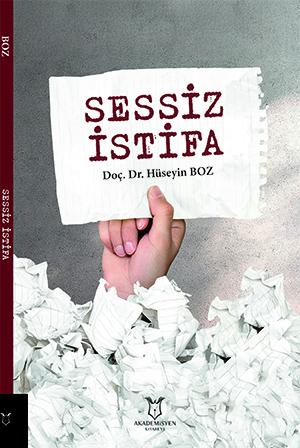
Sessiz İstifa
Özet
-
Referanslar
Aboramadan, M., Turkmenoglu, M. A., Dahleez, K. A., ve Cicek, B. (2020). “Narcissistic leadership and behavioral cynicism in the hotel industry: The role of employee silence and negative workplace gossiping”. International Journal of Contemporary Hospitality Management, 33(2): 428–447. (DOI: 10.1108/IJCHM-04-2020-0348).
Adams, J. S. (1963). “Towards an understanding of inequity”. The Journal of Abnormal and Social Psychology, 67(5): 422-436.
Afzal, S., Arshad, M., Saleem, S. ve Farooq, O. (2019). “The impact of perceived supervisor support on employees’turnover intention and task performance”. J. Manag. Dev., 38(5): 369 – 382. (DOI: 10. 1108/ jmd- 03- 2019- 0076).
Ahmad, I. ve Begum, K. (2023). “Impact of abusive supervision on intention to leave: A moderated mediation model of organizational-based self-esteem and emotional exhaustion”. Asian Bus. Manag. 22(2): 669–688. (DOI: 10. 1057/ s41291- 020- 00116-0).
Akkermans, J., Richardson, J. ve Kraimer, M. L. (2020), “The Covid-19 crisis as a career shock: Implications for careers and vocational behavior”. Journal of Vocational Behavior, 119: 103434. (DOI: 10.1016/j.jvb.2020.103434).
Akın, A. ve Çiçek, M. (2024). “Konaklama işletmelerinde sessiz istifanın nedenlerinin tespitine yönelik bir araştırma”. ISPEC International Journal of Social Sciences and Humanities, 8(2): 171-178. (DOI: 10.5281/zenodo.12511881).
Akingbola, K., Rogers, S. E. ve Intindola, M. (2023) “Employee engagement: What’s the deal?”. Employee Engagement in Nonprofit Organizations, Palgrave Macmillan, Cham, 1-36.
Aksoy, D. (2024). İş Yaşam Dengesi, Toksik Yönetici Davranışları ve Çalışanların Sessiz İstifası Arasındaki İlişkilerin İncelenmesi. Yayımlanmamış Yüksek Lisans Tezi. Ufuk Üniversitesi Sosyal Bilimler Enstitüsü, Ankara.
Alami, R., Stachowicz-Stanusch, A., Agarwal, S. ve Al Masaeid, T. (2024). “Predicting quiet quitting: Machine learning insights into silent resignations in healthcare industry”. Journal of Ecohumanism, 3(4): 3444–3462. (DOI: 10.62754/joe.v3i4.3864).
Alanoğlu, M., Karabatak, S., Uslukaya, A. ve Kuloğlu, A. (2024). “Adaptation of the quiet quitting scale for teachers to Turkish culture: An empirical psychometric investigation”. International Journal of Assessment Tools in Education, 11(3): 463–480. (DOI: 10.21449/ijate.1437506).
Altan, S. ve Turunc, O. (2021). “Algılanan örgutsel destek ile iş yaşamında mutluluk ilişkisinde yaş ve iş yaşam dengesinin rolü”. İşletme Araştırmaları Dergisi, 13 (3): 2552-2570. (DOI: 10.20491/isarder.2021.1277).
Altıntaş, M. (2024). “Çalışma yaşamındaki negatif dinamiklerin çalışan davranışlarına etkisi: Sessiz istifanın aracılık rolü”. Ahi Evran Üniversitesi Sosyal Bilimler Enstitüsü Dergisi, 10(2): 255-274. (DOI: 10.31592/aeusbed.1465129).
Anand, A., Doll, J. ve Ray, P. (2024a). “Drowning in silence: a scale development and validation of quiet quitting and quiet firing”. International Journal of Organizational Analysis, 32(4): 721-743. (DOI: 10.1108/IJOA-01-2023-3600).
Anand, A., Sinitsyna, E., Takacs, S. ve Kazakov, S. (2024b). “Conversing in the shadow of echoes – a scale development and validation of the dark side of organizational internal communication”. European Business Review. (DOI: 10.1108/EBR-01-2024-0027).
Arar, T. (2023). “Çalışanları Sessiz İstifa Davranışı Sergilemeye Yönelten Unsurların İncelenmesi”. içinde: Hüseyin Ali K. (ed). Sosyal, Beşeri ve İdari Bilimler Alanında Gelişmeler–1, Platanus Publishing, s. 348-377. (DOI: 10.5281/zenodo.10015106).
Arar, T., Çetiner, N., Yurdakul, G. (2023). “Quiet quitting: Building a comprehensive theoretical framework”. Journal of Academic Researches and Studies, 15(28): 122-138. (DOI: 10.20990/kilisiibfakademik.1245216).
Armstrong, R. ve Pfandler, C. (2024). “Taming a wild new term: Exploring the concept of quiet quitting as a coping response”. Employee Relations: The International Journal. (DOI: 10.1108/ER-03-2024-0172).
Atalay, M. ve Dağıstan, U. (2024). “Quiet quitting: a new wine in an old bottle?”. Personnel Review, 53(4): 1059-1074. (DOI: 10.1108/PR-02-2023-0122).
Avcı, N. (2023). “Örgütsel sinizm, örgütsel sessizlik, işte sözde var olma ve sessiz istifa arasındaki ilişkiler: İstanbul Maltepe Belediyesi örneği”. Süleyman Demirel Üniversitesi Vizyoner Dergisi, 14(39): 968-989. (DOI: 10.21076/vizyoner.1217165).
Avşar, M. (2024). “Konaklama işletmelerinde çalışanların “Sessiz İstifa” kavramına ilişkin algılarının metafor analizi ile incelenmesi”. Nevşehir Hacı Bektaş Veli Üniversitesi SBE Dergisi, 14(1): 343-355. (DOI: 10.30783/nevsosbilen.1420681).
Ayabakan, B. Ç. (2023). “İş Etiği Penceresinden Sessiz İstifa”. Uluslararası Sosyal Bilimlerde Yenilikçi Yaklaşımlar Dergisi, 7(2): 106-126. (DOI: 10.29329/ijiasos.2023.574.3).
Aycan, H. B. (2024). Finans Sektöründe Çalışanların İşten Ayrılma Niyetlerinin ve Sessiz İstifalarının İnsan Kaynakları Analitiği Yöntemleri ile Tahmin Edilmesi. Yayımlanmamış Yüksek Lisans Tezi. Yıldız Teknik Üniversitesi Fen Bilimleri Enstitüsü, İstanbul.
Aydın, E. ve Azizoğlu, Ö. (2022). New term for an existing concept: quiet quitting—a selfdetermination perspective. 5th International Congress on Critical Debates in Social Sciences, Burhaniye, Turkey, 7–9 Ekim.
Azeem, M. U., Bajwa, S. U., Shahzad, K. ve Aslam, H. (2020). “Psychological contract violation and turnover intention: The role of job dissatisfaction and work disengagement”. Employee Relations: The International Journal, 42(6): 1291–1308. (DOI: 10.1108/ER-09-2019-0372).
Badru, A. F., Karadas, G. ve Olugbade, O. A. (2022). “Employee voice: The impact of high-performance work systems and organisational engagement climate”. The Service Industries Journal, 1–29. (DOI: 10.1080/02642069.2022.2056163).
Bakker, A. B., ve de Vries, J. D. (2021). “Job demands–resources theory and self-regulation: New explanations and rem¬edies for job burnout”. Anxiety, Stress, and Coping, 34(1): 1–21. (DOI: 10.1080/10615806.2020.1797695).
Bakker, A. B. ve Demerouti, E. (2007). “The job demands-resources model: State of the art”. Journal of Managerial Psychology, 22(3): 309–328. (DOI: 10.1108/02683940710733115).
Bakker, A. B., Demerouti, E., De Boer, E. ve Schaufeli, W. B. (2003). “Job demands and job resources as predictors of absence duration and frequency”. Journal of Vocational Behavior, 62(2): 341–356. (DOI: 10.1016/S0001-8791(02)00030-1).
Bakker, A. B., Demerouti, E. ve Euwema, M. C. (2005). “Job resources buffer the impact of job demands on burnout”. Journal of Occupational Health Psychology, 10(2): 170–180. (DOI: 10.1037/1076-8998.10.2.170).
Bakker, A. B., Hakanen, J. J., Demerouti, E. ve Xanthopoulou, D. (2007). “Job resources boost work engagement, particularly when job demands are high”. Journal of Educational Psychology, 99(2): 274–284. (DOI: 10.1037/0022-0663.99.2.274).
Bakker, A. B., Demerouti, E. ve Sanz-Vergel, A. I. (2014). “Burnout and work engagement: The JDR approach”. Annual Review of Organizational Psychology and Organizational Behavior, 1: 389-411. (DOI: 10.1146/annurev-orgpsych-031413-091235).
Bani-Melhem, S., Abukhait, R. M. ve Mohd Shamsudin, F. (2023). “This doesn’t make sense! Does illegitimate tasks affect innovative behaviour?”. The Service Industries Journal, 1–27. (DOI: 10. 1080/02642069.2022.2163994).
Bansal, V. (2023). Is quiet quitting a good idea? https://www.techtello.com/quiet-quitting/ (Erişim tarihi: 25.11.2024).
Bansal, S. ve Garg, N. (2024). “Quitting silently: A longitudinal research on the impact of workplace conflict and nonviolent work behavior”. Conflict Resolution Quarterly. 1–18. (DOI: 10.1002/crq.21444).
Berube, V., Maor, D., Mugayar-Baldocchi, M. ve Reich, A. (2022). “European talent is ready to walk out the door”, How should companies respond?”. www.mckinsey.com/capabilities/peopleand-organizational-performance/our-insights/european-talent-is-ready-to-walk-out-the-door-howshould-companies-respond (Erişim tarihi: 9.11.2024).
Blau, P. (1964). Exchange and Power in Social Life. Wiley, New York.
Blau, G. J. (1985). “The measurement and prediction of career commitment”. Journal of Occupational Psychology, 58(4): 277-288.
Boy, Y. ve Sürmeli M. (2023). “Quiet quitting: A significant risk for global healthcare”. J. Glob. Health, 13: 03014. (DOI: 10.7189/jogh.13.03014).
Boz, D. (2024). “Sessiz istifanın işten ayrılma niyetine etkisi: çağrı merkezi çalışanlarına yönelik bir araştırma”. Dumlupınar Üniversitesi İİBF Dergisi, 13: 1-11. (DOI: 10.58627/dpuiibf.1455202).
Boz, D., Duran, C., Karayaman, S. ve Deniz, A. (2023). “Sessiz İstifa Ölçeği”. içinde: Cengiz D. (ed). Sessiz İstifa, Eğitim Yayınevi, s. 9-41.
Boz, H. (2021). “Yöneticilerin yetenek yönetimi yetkinliklerinin işgörenlerin işten ayrılma niyeti ile ilişkisinde duygusal bağlılık, çalışmaya tutkunluk ve iş tatmininin aracılık rolü: Bankacılık sektörü işgörenleri üzerine bir araştırma”. İşletme Araştırmaları Dergisi, 13(4): 3236-3264. (DOI: 10.20491/isarder.2021.1320).
Bulut, M. B., Tanrıverdi, O., Tekeli, M. R., Yıldızeli, N., Ünal, N. N. ve Çolak, C. (2024). “Unveiling the hushed rebellion! Exploring the concept of quiet quitting in the modern workplace: Development and validation of quiet quitting scale”. Akademik Araştırmalar ve Çalışmalar Dergisi, 16(30): 198-223. (DOI: 10.20990/kilisiibfakademik.1444762).
Campton, J., Tham, A. ve Ting, H. (2023). “Quiet Quitting – Implications for A0sian businesses”. Asian Journal of Business Research, 13(2): 128-134. (DOI: 10.14707/ajbr.230153).
Chitty, T. (2022). “Why ‘quiet quitting’ was well underway in China before the rest of the world caught on”. https://www.cnbc.com/video/2022/10/10/why-china-was-quiet-quitting-well-before-the-rest-of-the-world-caught-on.html (Erişim tarihi: 27.10.2024).
Christian, J. S. ve Ellis, A. P. (2014). “The crucial role of turnover intentions in transforming moral disengagement into deviant behavior at work”. Journal of Business Ethics, 119(2): 193–208. (DOI: 10.1007/s10551-013-1631-4).
Clifton, J. ve Harter, J. (2019). It's the Manager. Omaha, NE: Gallup Press.
Cohen, J. (2022). “Quiet quitting: the newest way to strike back against corporate greed”. The Miami Hurricane. https://www.themiamihurricane.com/2022/09/21/quiet -quitting-the-newest-way-to-strike-back-against-corporate-greed/. (Erişim tarihi: 23.11.2024).
Constantz, J. (2022). “Quiet quitting surges in finance as it gains steam across sectors”. Bloomberg.com.
Corbin, T. A. ve Flenady, G. (2024). “Quiet quitting as compensatory respect: Meaningful work, recognition, and the entrepreneurial ethic”. Philosophy of Management. (DOI: 10.1007/s40926-024-00320-4).
Cropanzano, R. ve Mitchell, M. S. (2005). “Social exchange theory: An interdisciplinary review”. J. Manag., 31(6): 874–900. (DOI: 10. 1177/ 01492 06305 279602).
Çalışkan, K. (2023). “Sessiz İstifa: Sonun başlangıcı mı yeniden diriliş mi?”. Journal of Organizational Behavior Review, 5(2): 190-204.
Çimen, A. İ. ve Yılmaz, T. (2023). “Sessiz istifa ne kadar sessiz”. Sakarya Üniversitesi İşletme Enstitüsü Dergisi, 5(1): 27-33. (DOI: 10.47542/sauied.1256798).
Dai, Z., Li, J., Wang, F., Wang, L., ve Wang, Y. (2023). “Organizational management: Quiet quitting’s mitigation strategies for organizational response”. Journal of Education, Humanities and Social Sciences, 19: 25-32. (DOI: 10.54097/ehss.v19i.10944).
De Jong, E. M., Ziegler, N., ve Schippers, M. C. (2020). “From shattered goals to meaning in life: life crafting in times of the COVID-19 pandemic”. Frontiers in Psychology, 11: 1-6. (DOI: 10.3389/fpsyg.2020.577708).
Demerouti, E., Bakker, A. B., Nachreiner, F. ve Schaufeli, W. B. (2001). “The job demands-resources model of burnout”. Journal of Applied Psychology, 86(3): 499–512. (DOI: 10.1037/0021-9010.86.3.499).
Demirkaya, H., Yıldız, B., Erener Özalçın, S. ve Öztürk, H. (2023). “İnsan kaynaklarında sessizliğin yankıları: Örgütlerde sessiz istifa fenomeninin anatomisi”. Süleyman Demirel Üniversitesi İnsan Kaynakları Yönetimi Dergisi, 2(2): 69-88.
Deniz, A. (2024). “Sessiz istifanın iş tatminine etkisi: Havacılık sektörü çalışanlarına yönelik bir araştırma”. Sosyal, Beşeri ve İdari Bilimler Dergisi, 7(2): 134-152. (DOI:10.26677/TR1010.2024.1368).
Deniz, A. (2023). “Sessiz İstifanın Demografik Değişkenler ile İlişkisi”. içinde: Cengiz D. (ed). Sessiz İstifa, Eğitim Yayınevi, s. 42-61.
Dennehy, J. (2023). Nearly two-thirds of workforce in UAE admit they’re “quiet quitting”. The National. https://www.thenationalnews.com/uae/2023/06/13/uae-leads-region-in-having-mostengaged- workforce-survey-finds/ (Erişim tarihi: 12.11.2024).
De Smet, A., Dowling, B., Hancock, B. ve Schaninger, B. (2022). The great attrition is making hiring harder. Are you searching the right talent pools?, Borderless Leadership, https://www.borderless.net/news/borderless-leadership/the-great-attrition-is making-hiringharder-are-you-searching-the-right-talent-pools/. (Erişim tarihi: 12.11.2024).
Dill, K. ve Yang, A. (2022). “'Quiet quitting' gets a booming backlash”. https://www.proquest.com/newspapers/quiet-quitting-gets-booming backlash/docview/2706200174/se-2 (Erişim tarihi: 11.11.2024).
Domingue, J.-L., Lauzier, K. ve Foth, T. (2024). “Quiet quitting: Obedience a minima as a form of nursing resistance”. Nursing Philosophy, 25: e12493. (DOI: 10.1111/nup.12493).
Duran, C. (Ed.) (2023). Sessiz İstifa. 1. Baskı, Eğitim Yayınevi, İstanbul.
Dutta, S., Thomas, A., Shiva, A., Papa, A. ve Cuomo, M. T. (2024). “The hustle behind knowledge: Role of workplace ostracism and knowledge hiding towards quiet quitting in knowledge-intensive organisations”. Journal of Knowledge Management. (DOI: 10.1108/JKM-01-2024-0035).
Edelman, L. (2022), “Quiet quitting’ is a serious threat to ourway of life”, The Boston Globe, www.bostonglobe.com/2022/08/31/business/quiet-quitting-is-serious-threat our-way-life-justask-arianna-huffington/ (Erişim tarihi: 14.11.2024).
Efendi, M., Hawabi, A. ve Purwaningtyas, E. (2023). “The effect of work-life balance on quiet quitting in millennial generation workers”. Proceedings of the Second Conference on Psychology and Flourishing Humanity. https://www.atlantis-press.com/proceedings/pfh-23/125996296 (Erişim tarihi: 17.11.2024).
Eflatun, M. (2023). “Yeni bir kavram olarak sessiz istifa: Özellikler, tanıma ve önleme”. Journal of Academic Analysis, 1(1): 17-31.
Eisenberger, R., Armeli, S., Rexwinkel, B., Lynch, P. D. ve Rhoades, L. (2001). “Reciprocation of perceived organizational support”. Journal of Applied Psychology, 86(1): 42-51. (DOI: 10.1037/0021-9010.86.1.42).
Eisenberger, R., Cummings, J., Armeli, S. ve Lynch, P. (1997). “Perceived organizational support, discretionary treatment, and job satisfaction”. Journal of Applied Psychology, 82(5): 812-820. (DOI: 10.1037/0021-9010.82.5.812).
Elgan, M. (2022). It’s time to quit quitting on the quiet quitters. https://www.computerworld.com/article/1613093/its-time-to-quit-quitting-on-the-quiet-quitters.html. (Erişim tarihi: 30.10.2024).
Ellera, L., Jamali, D. ve Caldwell, C. (2023). “Quiet quitting” and “quiet thriving” – flourishing in the modern organization”, The Journal of Values-Based Leadership, 16(2): 1-23. (DOI: 10.22543/1948-0733.1477).
Ellis, L., ve Yang, A. (2022). If your co-workers are quiet quitting here’s what that means. https://www.wsj.com/articles/if-your-gen-z-co-workers-are-quiet quittingheres-whatthat-means-11660260608?mod=series_ (Erişim tarihi: 24.11.2024).
Esen, D. (2022). “Managing the remote workforce in the new normal”. İçinde: International Perspectives and Strategies for Managing an Aging Workforce (Ed. Fatma İnce), IGI Global, 160-177.
Esen, D. (2023). “Quiet Quitting in Public institutions: A descriptive content analysis”. International Journal of Contemporary Economics and Administrative Sciences, 13(1): 296-326. (DOI: 10.5281/zenodo.8428256).
Ferrel, O. C., ve Fraedrich, J. (1994). Business Ethics: Ethical Decision Making and Cases. USA: Houghton Mifflin Company.
Ferrel, O. C., Fraedrich, J. ve Ferrell, L. (2008). Business ethics: Ethical decision making and cases. Boston: Houghton Mifflin Company.
Fidelity (2022). “What is quiet quitting”. https://www.fidelity.com/learning-center/smart-money/whatisquietquitting#:~:text=%22Quiet%20quitting%22 %20isnT1 textquoterightt,more%20effective%20than%20quiet%20quitting (Erişim tarihi: 17.11.2024).
Formica, S. ve Sfodera, F. (2022). “The great resignation and quiet quitting paradigm shifts: An overview of current situation and future research directions”. Journal of Hospitality Marketing and Management, 31(8): (DOI: 899-907. 10.1080/19368623.2022.2136601).
Foster, A. (2022), “The surprising origin of the ‘quiet quitting’ trend sweeping multiple countries”. https://nypost.com/2022/08/02/the-surprising-origin-of-the-quiet-quitting-trendsweeping-multiple-countries/ (Erişim tarihi: 14.10.2024).
Fuller, J. ve Kerr, W. (2022). The Great Resignation Didn’t Start with the Pandemic. Harvard Business Review. Harvard Business Publishing. https://hbr.org/2022/03/the-great-resignation-didnt-startwith-the-pandemic (Erişim tarihi: 11.11.2024).
Galanis, P., Katsiroumpa, A., Vraka, I., Siskou, O., Konstantakopoulou, O., Moisoglou, I., Gallos, P. ve Kaitelidou, D. (2023a). “The quiet quitting scale: Development and initial validation”. AIMS Public Health, 10(4): 828-848. (DOI: 10.3934/publichealth.2023055).
Galanis, P., Katsiroumpa, A., Vraka, I., Siskou, O., Konstantakopoulou, O., Katsoulas, T., Moisoglou, I., Gallos, P. ve Kaitelidou, D. (2023b). The influence of job burnout on quiet quitting among nurses: The mediating effect of job satis¬faction. (DOI: 10.21203/rs.3.rs-3128881/v1).
Galanis, P., Katsiroumpa, A., Moisoglou, I., Kalogeropoulou, M., Gallos, P. ve Vraka, I. (2024a). “Emotional intelligence protects nurses against quiet quitting, turnover intention, and job burnout”. AIMS Public Health, 11(2): 601–613. (DOI: 10.3934/publichealth.2024030).
Galanis, P., Katsiroumpa, A., Vraka, I., Siskou, O., Konstantakopoulou, O., Katsoulas, T., Moisoglou, I., Gallos, P. ve Kaitelidou, D. (2024b). “Nurses quietly quit their job more often than other healthcare workers: An alarming issue for healthcare services”. International Nursing Review, 1–10. (DOI: 10.1111/inr.12931).
Galanis, P., Moisoglou, I., Katsiroumpa, A., Malliarou, M., Vraka, I., Gallos, P., Kalogeropoulou, M. ve Papathanasiou, I. V. (2024c). “Impact of workplace bullying on quiet quitting in nurses: The mediating effect of coping strategies”. Healthcare, 12: 797. (DOI: 10.3390/healthcare12070797).
Galanis, P., Moisoglou, I., Malliarou, M., Papathanasiou, I.V., Katsiroumpa, A., Vraka, I., Siskou, O., Konstantakopoulou, O. ve Kaitelidou, D. (2024d). “Quiet quitting among nurses increases their turnover intention: Evidence from Greece in the post-COVID-19 era”. Healthcare, 12: 79. (DOI: 10.3390/healthcare12010079).
Galanis, P., Moisoglou, I., Katsiroumpa, A., Vraka, I., Siskou, O., Konstantakopoulou, O., Kaitelidou, D. (2024e). “Moral resilience reduces levels of quiet quitting, job burnout, and turnover intention among nurses: Evidence in the post COVID-19 era”. Nursing Reports, 14: 254–266. (DOI: 10.3390/nursrep14010020).
Gallup (2023), State of the Global Workplace: 2023 Report. Gallup, Washington, DC, 1-95.
Gılıç, F., Yücel, N. B. ve İnandı, Y. (2025). “Quiet quitting in career ladders: Teacher perspective”. Pegem Journal of Education and Instruction, 15(1): 159-170. (DOI: 10.47750/pegegog.15.01.14).
Gökkaya, D. (2024). “İşe bağlı duygusal tükenmişliğin sessiz istifa üzerine etkisinde çalışma yaşam kalitesinin aracılık rolü: Sağlık çalışanlarında bir araştırma”, BMIJ, 12(3): 644-662. (DOI: 10.15295/bmij.v12i3.2414).
Gözlü, K. (2023). “Tükenmişlik bağlamında yeni bir kavram olarak sessiz istifa ve sağlık sektöründeki etkileri”. Meyad Akademi, 4(2): 213-241. (DOI: 10.59007/meyadakademi.1368789).
Graen, G., Novak, M. A. ve Sommerkamp, P. (1982). “The effects of leader—member exchange and job design on productivity and satisfaction: testing a dual attachment model”. Organizational Behavior and Human Performance, 30(1): 109-131. (DOI: 10.1016/0030-5073(82)90236-7).
Greenberg, J. (1990). “Organizational justice: yesterday, today, and tomorrow”. Journal of Management, 16(2): 399-432. (DOI: 10.1177/014920639001600208).
Greenhaus, J. H. ve Beutell, N. J. (1985). “Sources of conflict between work and family roles”. The Academy of Management Review, 10(1): 76-88. (DOI: 10.2307/258214.
Güler, M. (2023). “Çalışma kültüründe yeni bir kavram: Sessiz istifa”. Çukurova Üniversitesi Sosyal Bilimler Enstitüsü Dergisi, 32(1): 247-261. (DOI: 10.35379/cusosbil.1200345).
Gün, İ. (2024). “Sessiz istifa niyetini etkileyen faktörlerin AHP yöntemi ile değerlendirilmesi: Sağlık çalışanlarında bir uygulama”. Yönetim Bilimleri Dergisi/Journal of Administrative Sciences, 22(52): 500-520. (DOI: 10.35408/comuybd.1405013).
Gürer, A., Solmaztürk, A. B. ve Gökçe, F. (2024). “Sessiz istifa: Literatür incelemesi”. Toplum ve Kültür Araştırmaları Dergisi, 13: 1-41. (DOI: 10.48131/jscs.1383187).
Hackman, J. R. ve Oldham, G. R. (1980). “Work redesign and motivation”. Professional Psychology, 11(3): 445–455. (DOI: 10.1037/0735-7028.11.3.445).
Hamouche, S. ve Chabani, Z. (2021). “COVID-19 and the new forms of employment relationship: Implications and insights for human resource development”. Industrial and Commercial Training, 53(4): 366-379. (DOI: 10.1108/ICT-11-2020-0112).
Hamouche, S., Koritos, C. ve Papastathopoulos, A. (2023). “Quiet quitting: relationship with other concepts and implications for tourism and hospitality”. International Journal of Contemporary Hospitality Management, 35(12): 4297-4312. (DOI: 10.1108/IJCHM-11-2022-1362).
Hanisch, K. A. ve Hulin, C. L. (1991), “General attitudes and organizational withdrawal: an evaluation of a causal model”. Journal of Vocational Behavior, 39(1): 110-128. (DOI: 10.1016/0001-8791(91)90006-8).
Harter, J. (2022). “Is quiet quitting real?”. Workplace, https://www.gallup.com/workplace/398306/quiet-quitting-real.aspx (Erişim tarihi: 14.10.2024).
Herzberg, F. I. (1966). Work and the Nature of Man. World Pub. Co., Oxford, England.
Herzberg, F., Mausner, B. ve Snyderman, B. (1959). The Motivation to Work. John Wiley, New York.
Hill, T. E. (1979). “Symbolic protest and calculated silence”. Philosophy and Public Affairs, 9(1): 83–102.
Hobfoll, S. E. (2012). “Conservation of resources and disaster in cultural context: The caravans and passageways for resources”. Psychiatry, 75(3): 227-232.
Hobfoll, S. E. ve Lilly, R. S. (1993). “Resource conservation as a strategy for community psychology”. Journal of community psychology, 21(2): 128-148.
Holmgreen, L., Tirone, V., Gerhart, J., Hobfoll, S. E. (2017). Conservation of resources theory: Resource caravans and passageways in health contexts. içinde: C. L. Cooper ve J. C. Quick (Ed.), The handbook of stress and health: A guide to research and practice, 443–457. Wiley Blackwell. (DOI: 10.1002/9781118993811.ch27).
Hsu, H. (2022). “How do Chinese people evaluate ‘Tang-Ping’ (lying flat) and effort-making: The moderation effect of return expectation”. Frontiers in Psychology, 13: 1-7, (DOI: 10.3389/fpsyg.2022.871439).
Jha, S. (2009). “Determinants of employee turnover intentions: a review”. Management Today, Vol. 9(2): 1-13.
Jiwen Song, L., Tsui, A. S. ve Law, K. S. (2009). “Unpacking employee responses to organizational exchange mechanisms: The role of social and economic exchange perceptions”. J. Manag., 35(1): 56 – 93. (DOI: 10. 1177/ 01492 06308 321544).
Johar, N. A., Kew, S. N., Tasir, Z., ve Koh, E. (2023). “Learning analytics on student engagement to enhance students’ learning performance: A systematic review”. Sustainability, 15(10): 7849. (DOI: 10.3390/su15107849).
Johnson, J.R. (2023), “What’s new about quiet quitting (and what’s not)”. The Transdisciplinary Journal of Management, https://tjm.scholasticahq.com/article/72079-what-s-newaboutquiet-quitting-and-what-s-not (Erişim tarihi: 10.9.2024).
Kachhap, V. ve Singh, T. (2023). “Quiet quitting: a comprehensive exploration of hidden problems”. Development and Learning in Organizations: An International Journal, 38(5): 23-26. (DOI: 10.1108/DLO-10-2023-0214).
Kahn, W. A. (1990). “Psychological conditions of personal engagement and disengagement at work”. Academy of Management Journal, 33(4): 692–724. (DOI: 10.2307/256287).
Kang, J., Kim, H. ve Cho, O-H. (2023). “Quiet quitting among healthcare professionals in hospital environments: A concept analysis and scoping review protocol”. BMJ Open, 13:e077811. (DOI:10.1136/bmjopen-2023-077811).
Kalargyrou, V., Sundar, V. and Jahani, S. (2023), “Managers’ attitudes toward employees with depression and organizational citizenship behaviors in the hospitality industry: assessing the mediating role of personality”, International Journal of Contemporary Hospitality Management, 35(2): 602-629, (DOI: 10.1108/IJCHM-01-2022-0082).
Kaplan, J. (2022). “Managers freaking out over 'quiet quitting' shows some bosses are out of touch and have always expected their employees to work extra”, https://www.proquest.com/newspapers/managers-freaking-out-over-quiet-quitting-shows/docview/2707311078/se-2 (Erişim tarihi: 3.11.2024).
Karadaş, A. ve Çevik, C. (2024). “Psychometric analysis of the quiet quitting and quiet firing scale among Turkish healthcare professionals”. Journal of Evaluation in Clinical Practice. 1–9. (DOI: 10.1111/jep.14136).
Karaduman, E. (2023). “Sessiz istifanın Linkedin’de analizi: Turizm ve planlama için çıkarımlar”. Uluslararası Sosyal ve Ekonomik Çalışmalar Dergisi, 4(2): 269-284, (DOI: 10.62001/gsijses.1405612).
Karaimam, S. (2024). Liderlik Tarzlarının Çalışanların Sessiz İstifa Eğilimleri Üzerindeki Etkisi. Yayımlanmamış Yüksek Lisans Tezi. Erciyes Üniversitesi Sosyal Bilimler Enstitüsü, Kayseri.
Karalinç, T. (2024). “The effect of quiet quitting on job performance: A research on health sector employees”. Üçüncü Sektör Sosyal Ekonomi Dergisi, 59(2): 1008-1024. (DOI: 10.15659/3.sektor-sosyal-ekonomi.24.06.2395).
Karaman Kepenekci, Y., Katıtaş, S., ve Ökdem, M. (2024). “Öğretmenlere ilişkin Sessiz İstifa Ölçeği’nin geliştirilmesi ve öğretmenlerin sessiz istifaya ilişkin görüşlerinin çeşitli değişkenler açısından incelenmesi”. Trakya Eğitim Dergisi, 14(2): 1344-1363. (DOI: 10.24315/tred.1469047).
Karasioğlu, H. H. (2024). Organizational Silence, Communication Satisfaction and Quiet Quitting: A Study in a Public Institution. Yayımlanmamış Yüksek Lisans Tezi. Ankara Yıldırım Beyazıt Üniversitesi Sosyal Bilimler Enstitüsü, Ankara.
Karaşin, Y. ve Öztırak, M. (2023). “Sessiz istifa tutum ölçeğinin geliştirilmesi”. Çankırı Karatekin Üniversitesi İktisadi ve İdari Bilimler Fakültesi Dergisi, 13(4): 1443-1460. (DOI: 10.18074/ckuiibfd.1311522).
Karavelioğlu, C., Baran, H. ve Giderler, M. E. (2023). “Sessiz İstifa Kavramına Genel Bir Bakış”. içinde: Aydın K. (ed). Güncel İşletmecilik Araştırmaları-4, Eğitim Yayınevi, s. 1-19.
Karayaman, S. (2023a). “Kuşak Teorisi Bağlamında Sessiz İstifa”. içinde: Cengiz D. (ed). Sessiz İstifa, Eğitim Yayınevi, s. 62-86.
Karayaman, S. (2023b). “Sessiz istifanın kişi-örgüt uyumundaki etkisi: İmalat işletmesi çalışanlarına yönelik bir araştırma”. Ulakbilge Sosyal Bilimler Dergisi, 85: 515–526. (DOI: 10.7816/ulakbilge-11-85-04).
Karen, S. C. (2015). Exchange: Social. İçinde: International Encyclopedia of the Social and Behavioral Sciences (ed. Wright, J. D.). Elsevier Science. (DOI: 10. 1016/ B978-0- 08- 097086- 8. 32056-6).
Karrani, M. A., Bani-Melhem, S. ve Mohd-Shamsudin, F. (2024). “Employee quiet quitting behaviours: conceptualization, measure development, and validation”. The Service Industries Journal, 44(3-4): 218-236. (DOI: 10.1080/02642069.2023.2286604).
Keary, T. (2022). ‘Quiet quitting’ poses a cybersecurity risk that calls for a shift in workplace culture. https://venturebeat.com/security/quiet-quitting-cybersecurity/. (Erişim tarihi: 25.11.2024).
Kerse, G., Deniz, V., ve Çakıcı, A. B. (2024). “Sessiz istifa ölçeğinin Türkçe formunun psikometrik özelliklerinin sınanması”. Gümüşhane Üniversitesi Sosyal Bilimler Dergisi, 15(3): 749-762.
Khan, A. K., Khalid, M., Abbas, N. and Khalid, S. (2022), “COVID-19-related job insecurity and employees’ behavioral outcomes: mediating role of emotional exhaustion and moderating role of symmetrical internal communication”. International Journal of Contemporary Hospitality Management, 34(7): 2496-2515, (DOI: 10.1108/IJCHM-05-2021-0639).
Kılıç, B. (2024). Öğretmenlerde Sessiz İstifa (Muğla İli Örneği). Yayımlanmamış Yüksek Lisans Tezi. Muğla Sıtkı Koçman Üniversitesi Eğitim Bilimleri Enstitüsü, Muğla.
Kızılcan, S. (2023). “Airline Cabin Crew Employees and Quiet Quitting: An Evaluation from the Perspective of Cabin Chiefs”. International Journal of Social and Humanities Sciences Research, 10(101): 2951-2961. (DOI: 10.5281/zenodo.10253445).
Kilpatrick, A. 2022. “What is quiet quitting? Work-life balance boundaries”. OPB. https://www.opb.org/article/2022/08/19/what-is-quiet-quitting-work-lifebalance-boundaries (Erişim tarihi: 24.22.2024).
Klotz, A. C. ve Bolino, M. C. (2022). When quiet quitting is worse than the real thing. Harvard Business Review, https://hbr.org/2022/09/when-quiet-quitting-is-worse-than-the-real-thing (Erişim tarihi: 13.11.2024).
Kobak, Ö. (2023). Sessiz İstifa Kavramına İlişkin Bir Model Önerisi. Yayımlanmamış Yüksek Lisans Tezi. Yıldız Teknik Üniversitesi Sosyal Bilimler Enstitüsü, İstanbul.
Kolev, G. (2022). “What is “quiet quitting” (and should you join the trend)”. Officetopics.com. https://officetopics.com/what-is-quiet-quitting/ (Erişim tarihi: 23.11.2024).
Krueger, A. (2022), “Who is quiet quitting for?”, The New York Times, www.nytimes.com/2022/08/23/style/quiet-quitting-tiktok.html (Erişim tarihi: 12.11.2024)
Kruse, G. C. ve Tata-Mbeng, B. (2023). “A movement to redefine our relationship with work”. American Journal of Health Promotion, 37(4): 579-582. (DOI: 10.1177/08901171231159711e).
Lawless, B. (2023). “Performative enactments of resistance to academic neoliberalization: quiet quitting as educational transgression and sustainability”. Communication Education, 72(3): 16-319. (DOI: 10.1080/03634523.2023.2207144).
Lee, J. Y., Rocco, T. S. ve Shuck, B. (2020). “What is a resource: Toward a taxonomy of resources for employee engage¬ment”. Human Resource Development Review, 19(1): 5–38. (DOI: 10.1177/1534484319853100).
Lerouge, L. ve Truillo Pons, F. (2022). “Contribution to the study on the‘right to disconnect’ from work. Are France and Spain examples for other countries and EU law?”. European Labour Law Journal, 13(3): 450–465.
Lestari, N. S., Zainal, V. R., Chan, S. ve Nawangsari, L. C. (2024). “Impact of career development, job insecurity, and tech awareness on the quiet quitting of hospitality employees in Indonesia”. Problems and Perspectives in Management, 22(3): 427-439. (DOI:10.21511/ppm.22(3).2024.33).
Li, L. Z. ve Wang, S. (2020). “Prevalence and predictors of general psychiatric disorders and loneliness during COVID-19 in the United Kingdom”. Psychiatry Research, 291: 113267. (DOI: 10.1016/j.psychres.2020.113267).
Liu, K-L F. (2022), “What happened when I sprinkled a bit of ‘quiet quitting’ in my workday”. NBC, www.nbcnews.com/think/opinion/tik-tok-quiet-quitting-trend-is-not-aboutslacking-off-rcna45450 (Erişim tarihi: 18.11.2024).
Liu-Lastres, B., Karatepe, O. M. Ve Okumuş, F. (2024). “Combating quiet quitting: Implications for future research and practices for talent management”. International Journal of Contemporary Hospitality Management, 36(1): 13-24. (DOI: 10.1108/IJCHM-08-2023-1317).
Liu-Lastres, B., Wen, H. ve Huang, W.J. (2022), “A reflection on the great resignation in the hospitality and tourism industry”. International Journal of Contemporary Hospitality Management, 35(1): 235 – 249.
Livingston, B. A. (2023). “Treating people fairly: The feeling that underlies the trends”. American Journal of Health Promotion, 37(4): 575-578. (DOI:10.1177/08901171231159711d).
Lord, J. (2022), “Quiet quitting is a new name for an old method of industrial action”, TheConversation.com.
Lu, M., Al Mamun, A., Chen, X., Yang, Q. ve Masukujjaman, M. (2023). “Quiet quitting during COVID-19: The role of psychological empowerment”. Humanities and Social Sciences Communications, 10(485): 1-16. (DOI: 10.1057/s41599-023-02012-2).
Maan, A. T., Abid, G., Butt, T. H., Ashfaq, F. ve Ahmed, S. (2020). “Perceived organizational support and job satisfaction: A moderated mediation model of proactive personality and psychological empowerment”. Future Business Journal, 6(1): 1–12. (DOI: 10.1186/s43093-020-00027-8).
Macey, W. H. ve Schneider, B. (2008). “The meaning of employee engagement”. Industrial and Organizational Psychology, 1(1): 3-30. (DOI: 10.1111/j.1754-9434.2007.0002.x).
Maden, C. (2014). “Impact of fit, involvement, and tenure on job satisfaction and turnover intention”. The Service Industries Journal, 34(14): 1113–1133. (DOI: 10.1080/02642069.2014.939644).
Mahand, T. ve Caldwell, C. (2023). “Quiet quitting-causes and opportunities”. Business and Management Research, 12(1): 1-11. (DOI: 10.5430/bmr.v12n1p9).
Mannheim, K. (1970). “The problem of generations”. Psychoanalytic review, 57(3): 378-404.
Marks, A. (2023), “The great resignation in the UK–reality, fake news or something in between?”. Personnel Review, 52(2): 408-414, (DOI: 10.1108/PR-09-2022-0608).
Maslach, C., Jackson, S. ve Leiter, M. (1996). “The Maslach burnout inventory manual”, içinde: Zalaquett, C. P. and Wood, R.J. (Ed.), Evaluating Stress: A Book of Resources, 3. Basım, The Scarecrow Press, 191-218.
Maslach, C. (2003). Burnout: The Cost of Caring. ISHK, Los Altos, CA.
Masterson, V., (2022). “What is quiet quitting?”. https://www.weforum.org/agenda/2022/09/tiktok-quiet-quitting-explained/ (Erişim tarihi: 10. 10. 2024).
Meijman, T. F. ve Mulder, G. (2013). Psychological aspects of workload. İçinde: A handbook of work and organizational psychology, 5–33. Psychology Press.
Meydan, C.H. ve Akkaş, H. (2024). Çok Boyutlu Sessiz İstifa Ölçeği Türkçe Geçerleme Ön Çalışması. III. Uluslararası Katılımlı İnsan ve Toplum Bilimleri Kongresi, s. 158-162. Ankara.
Meyer, J. P. ve Allen, N. J. (1991). “A three-component conceptualization of organisational commitment”, Human Resource Management Review, 1(1): 61-89.
Meyer, J. P. ve Maltin, E. R. (2010). “Employee commitment and well-being: a critical review, theoretical framework and research agenda”. Journal of Vocational Behavior, 77(2): 323-337.
Meyer, J. P., Stanley, L. J. ve Parfyonova, N. M. (2012), “Employee commitment in context: the natüre and implication of commitment profiles”. Journal of Vocational Behavior, 80(1): 1-16.
Meyer, J. P. ve Allen, N. J. (1997). Commitment in the Workplace. Theory, Research and Application. Sage Publications, Kanada.
Meyer, J. P., Stanley, D. J., Herscovitch, L. ve Topolnytsky, L. (2002). “Affective, continuance, and normative commitment to the organization: A meta-analysis of antecedents, correlates, and consequences”. Journal of Vocational Behavior, 61: 20–52.
Miller, K. L. (2022). “Actually, we’ve been ‘quiet quitting’ and ‘quiet firing’ for years”. The Washington Post. https://www.washingtonpost.com/business/2022/09/08/ quiet-quitting-quiet-firing-what-todo/ (Erişim tarihi: 28.11.2024).
Molchan, S. ve Clore, C. (2023). “What’s going on in the workplace? The impact of quiet quitting and the great resignation in Corporate America”. Aspen Journal of Scholarly Works, 3: 200–210.
Morrison-Beedy, D. (2022), “Editorial: are we addressing ‘Quiet Quitting’ in faculty, staff, and students in academic settings?”. Building Healthy Academic Communities Journal, 6(2):7-8, (DOI: 10.18061/bhac.v6i2.9309).
Mosaddegh, K. (2024). The Impact of Human Resource Practices on Quiet Quitting with Moderating Effect of Organizational Justice: A Comparison between Public and Private Banks in Iran. Yayımlanmamış Yüksek Lisans Tezi. Bahçeşehir Üniversitesi, İstanbul.
Ng, E. ve Stanton, P. (2023). “Editorial: The great resignation: Managing people in a post COVID-19 pandemic world”. Personnel Review, 52(2): 401–407. (DOI: 10.1108/PR- 03-2023-914).
Nilufad, A. (2022). “Quiet quitting: why doing less at work could be good for you – and your employer”. The Conversation Media Group Ltd. https://theconversation.com/quiet-quitting-why-doing-less-at-work-could-be good-for-you-and-your-employer-188617 (Erişim tarihi: 24.11.2024).
Nimmi, P. M., Syed, F., Manjaly, N. B. ve Harsha, G. (2024). “Employee’s narrative on quiet quitting – a qualitative analysis”. Employee Relations: The International Journal. (DOI: 10.1108/ER-10-2023-0538).
Oğan, E. ve Çetiner, N. (2024). “Sessiz istifa kavramına yönelik bir bibliyometrik analiz”. Dokuz Eylül Üniversitesi İşletme Fakültesi Dergisi, 25(1): 203-221. (DOI: 10.24889/ifede.1438769).
Oh, H., Jeong, M., Shin, H. H. ve Schweyer, A. (2023), “Nonlinear effects of employee engagement and satisfaction on turnover intention”. International Journal of Contemporary Hospitality Management, 35(7): 2410 – 2436. (DOI: 10.1108/IJCHM-05-2022-0661).
Organ, D.W. (1988), Organizational Citizenship Behavior: The Good Soldier Syndrome. Lexington Books/D. C. Heath and Com, Lexington,MA, England.
Organ, D. W. (1990). “The motivational basis of organizational citizenship behavior”. Research in Organizational Behavior, 12(1): 43-72.
Organ, D.W. (1997). “Organizational citizenship behavior: it’s construct clean-up time”, Human Performance, 10(2): 85-97. (DOI: 10.1207/s15327043hup1002_2).
Organ, D.W. (2018). “Organizational citizenship behavior: Recent trends and developments”. Annu. Rev. Organ. Psychol. Organ. Behav., 5: 295–306.
Örücü, E. ve Hasırcı, I. (2024a). “Örgütlerde hiyerarşi kültürü ve lider-üye etkileşiminin sessiz istifa davranışı üzerindeki etkisi”. Doğuş Üniversitesi Dergisi, 25(1): 275- 291. (DOI: 10.31671/doujournal.1338999).
Örücü, E., Hasırcı, I. (2024b). “Hiyerarşi kültürünün sessiz istifa davranışı üzerindeki etkisinde banka çalışanlarının eğitim durumlarının düzenleyici rolü”. İzmir İktisat Dergisi, 39(2): 389-408. (DOI: 10.24988/ije.1345965).
Özateş, A. F. (2024). The Effect of Favoritism on Engagement and Quiet Quitting: The Mediating Role of Organizational Justice. Yayımlanmamış Yüksek Lisans Tezi. Türk - Alman Üniversitesi Sosyal Bilimler Enstitüsü, İstanbul.
Özbek, A. (2024). “Sessiz istifanın muhasebe meslek mensuplarının etik iklim algıları üzerine etkisi”. Journal of History School, 72: 2554-2573. (DOI: 10.29228/joh.74310).
Özcan, E. ve Ilıman Yaltagil, E. (2024). “Sağlıkta sessiz istifanın nedenleri ve çözüm yolları”. İşletme Araştırmaları Dergisi, 16(2): 919-935. (DOI: 10.20491/isarder.2024.1833).
Özen, H., Korkmaz, M., Konucuk, E., Çeven, B., Sayar, N., Menşan, N. Ö. ve Chan, T. C. (2024). “Evaluation of quiet quitting: Is the bell ringing?”. Journal of Qualitative Research in Education, 38: 108-142. (DOI: 10.14689/enad.38.1910).
Özer, Y. (2022). “Gürültülü sessizlik”. Dünya. https://www.dunya.com/kose-yazisi/gurultulusessizlik/670372 (Erişim tarihi: 15.10.2024).
Öztürk, E., Arıkan, Ö. U. ve Ocak, M. (2023). “Understanding quiet quitting: Triggers, antecedents, and consequences”. International Journal of Behavior, Sustainability and Management, 10(18): 57-79.
Pandey, E. (2022). “The staying power of quiet quitting”, In, Axios Finish Line.
Parasuraman, S. (1982). “Predicting turnover intentions and turnover behavior: a multivariate analysis”. Journal of Vocational Behavior, 21(1): 111-121.
Park, J., Chae, H. ve Kim, H. J. (2017). “When and why high performers feel job dissatisfaction: a resource flow approach”, Social Behavior and Personality: An International Journal, 45(4): 617-628 (DOI: 10.2224/sbp.5877).
Parker, K. ve Horowitz, J. (2022). “Majority of workers who quit a job in 2021 cite low pay, no opportunities for advancement, feeling disrespected”. Pew Research Center. https://www.pewresearch.org/fact-tank/2022/03/09/majority-of workers-who-quit-a-job-in-2021-cite-low-pay-no-opportunities-for advancement-feeling-disrespected/. (Erişim tarihi: 14.11.2024).
Pevec, N. (2023). “The concept of identifying factors of quiet quitting in organizations: an integrative literature review”. Izzivi Prihodnosti, 8(2): 128-147, (DOI: 10.37886/ip.2023.006).
Pollack, S. (2022). “Antiwork and the Rejection of Hustle Culture: A Guide for HR Leaders”. https://bit.ly/3JZJxYu. (Erişim tarihi: 15. 10. 2024).
Prentice, C., Dominique-Ferreira, S., Wang, X., Tuominen, J., Duarte, M. ve Rocha, H. (2024). “Work-life imbalance, burning out, feeling down, I will quit, but quietly – the case of hospitality employees”. Journal of Hospitality Marketing and Management, 1-22. (DOI: 10.1080/19368623.2024.2389074).
Qi, J., Wang, S. ve Lindsey Hall, K. K. (2023). “Bridging employee engagement and customer engagement in a service context”. Journal of Business Research, 160, 113803. (DOI: 10.1016/j.jbusres.2023.113803).
Rhoades, L. ve Eisenberger, R. (2002), “Perceived organisational support: a review of the literature”. Journal of Applied Psychology, 87(4): 698-714.
Richardson, S.D. (2023). Reimagining quiet quitting. in Richardson, S.D. (Ed.), Springer International Publishing, 105-117. (DOI:10.1007/978-3-031-29211-8_8).
Rogers, G. (2022). “When will “quiet quitting” impact student success?”. https://www.edsights.io/post/when-will-quiet-quitting-impact-student-success (Erişim tarihi: 23.11.24).
Rodríguez-Montoya, C. Morel, R. D. C. ve Frías-Rodríguez, D. (2024). “Quiet quitting in the Dominican Republic: the employers’ perspective”. Management Research: Journal of the Iberoamerican Academy of Management. (DOI: 10.1108/MRJIAM-12-2023-1488).
Saks, A. M. (2006). “Antecedents and consequences of employee engagement”. Journal of Managerial Psychology, 21(7): 600-619, (DOI: 10.1108/02683940610690169).
Salanova, M. ve Schaufeli, W. B. (2008). “A cross-national study of work engagement as a mediatör between job resources and proactive behaviour”, The International Journal of Human Resource Management, 19(1): 116-131.
Salem, N. (2022), “Quiet quitting”, https://www.dental-nursing.co.uk/news/quiet-quitting (Erişim tarihi: 7.10.2024).
Savaş, B. Ç., ve Turan, M. (2023). “Sessiz istifa ölçeği: Geçerlik ve güvenirlik çalışması”. The Online Journal of Recreation and Sports (TOJRAS), 12(3): 442-453. (DOI: 10.22282/tojras.1291075).
Saygılı, Z. ve Avcı, N. (2023). “Çalışanların görev odaklı ve insan odaklı liderlik tarzı algılarının adanmışlıktan sessiz istifaya değin farklılaşması üzerine bir inceleme”. Anlambilim MTÜ Sosyal ve Beşeri Bilimler Dergisi, 3(1): 212-227.
Scheyett, A. (2023). “Quiet quitting”. Social Work, 68(1): 5–7. (DOI: 10.1093/sw/swac051).
Schrock, W. A., Hughes, D. E., Fu, F. Q., Richards, K. A. ve Jones, E. (2016). “Better together: Trait competitiveness and competitive psychological climate as antecedents of salesperson organizational commitment and sales performance”. Marketing Letters, 27(2): 351-360.
Scott, E. (2022). “Could ‘quiet quitting’ your job be the answer to burnout? What you need to know”. https://metro.co.uk/2022/07/29/could-the-quiet-quitting-trend-be-the-answer-to-burnout-what-you-need-to-know-17085827/ (Erişim tarihi: 15.10.2024).
Serenko, A. (2023). “The great resignation: The great knowledge exodus or the onset of the great knowledge revolution?”. Journal of Knowledge Management, 27(4): 1042–1055. (DOI: 10.1108/JKM-12-2021-0920).
Serenko, A. (2024). “The human capital management perspective on quiet quitting: Recommendations for employees, managers, and national policymakers”. Journal of Knowledge Management, 28(1): 27-43. (DOI: 10.1108/JKM-10-2022-0792).
Seymen, O. A., Durmaz, Ç. ve Çakır, S. (2023). “Sessiz İstifa Davranışı, İşten Ayrılma Niyetinin Neresinde? Bütünleştirici Bir Kavramsal Değerlendirme”. içinde: Dr. Enis Baha B. ve Orhan Ş. (eds). Sosyal, İnsan ve İdari Bilimlerde Güncel Yaklaşımlar I, Duvar Yayınları, s. 949-980.
Shore, L. M. ve Martin, H. J. (1989), “Job satisfaction and organisational commitment in relation to work performance and turnover intentions”. Human Relations, 42(7): 625-638.
Smith, C. A., Organ, D. ve Near, J. P. (1983). “Organizational citizenship behavior: its nature and antecedents”. Journal of Applied Psychology, 68(4): 653-663, (DOI: 10.1037/0021-9010.68.4.653).
Solymosi-Szekeres, B. ve Zlatanović, S. S. (2024). “Approaching quiet quitting from the labor law perspective: A case study of Hungarian and Serbian legislation”. Pravni Zapisi, 15(1): 218–238. (DOI: 10.5937/pravzap0-50313).
Soren, A. ve Ryff, C. D. (2023). “Meaningful work, well-being, and health: Enacting a eudaimonic vision”. International Journal of Environmental Research and Public Health, 20, 6570. (DOI: 10.3390/ijerph20166570).
Spiegel, S. (2023), “What is quiet quitting and are your employees doing it?”, Crewhu, www.crewhu.com/blog/spot-and-prevent quietquitting#:_:text=Quiet%20quitte rs%20do%20the%20bare,marking%20time%20until%205%3A00 (Erişim tarihi: 11.11.2024).
Srivastava, S., Saxena, A., Kapoor, V. ve Qadir, A. (2024a). “Sailing through silence: Exploring how negative gossip leaves breeding grounds for quiet quitting in the workplace”. International Journal of Conflict Management, 35(4): 733-755. (DOI: 10.1108/IJCMA-07-2023-0139).
Srivastava, A., Pandey, A., Sharma, D. ve Ghosh, K. (2024b). “Apathy under the surface: Theorizing quiet quitting’s impact on organizational learning”. Development and Learning In Organizations: An International Journal. (DOI: 10.1108/DLO-03-2024-0080).
Stathis, J. (2022). Everything you need to know about “act your wage”. Reader’s Digest (online). https://www.rd.com/article/act-your-wage/ (Erişim tarihi: 7.8.2024).
Suhendar, A., Setiadi, R., Artati, A. ve Rohman, A. (2023). “The new trend: why Indonesian digital start-up employees are opting for quiet quitting?”. WSEAS TRANSACTIONS on COMPUTER RESEARCH, 11: 166-180. (DOI: 10.37394/232018.2023.11.15).
Sungu, L. J., Weng, Q. ve Kitule, J. A. (2019). “When organizational support yields both performance and satisfaction: The role of performance ability in the lens of social exchange theory”. Personnel Review, 48(6): 1410–1428. (DOI: 10.1108/PR-10- 2018-0402).
Sürücü, L., Güleryüz, İ. ve Maşlakcı, A. (2023). “Sessiz istifa ve sessiz işten çıkarma ölçekleri: Türkçeye uyarlama çalışması”. Anadolu Üniversitesi İktisadi ve İdari Bilimler Fakültesi Dergisi, 25(2): 570-591. (DOI: 10.53443/anadoluibfd.1370880).
Şahinli, S. ve Eren, M. (2024). “Sessiz istifa ölçeği: Geliştirilmesi, geçerliliği ve güvenilirliği: Metodolojik çalışma”. Turkiye Klinikleri J Health Sci. 9(3): 608-615. (DOI: 10.5336/healthsci.2024-102241).
Talukder, F. ve Prieto, L. (2024). “A “quiet quitting” scale: development and validation”. International Journal of Organizational Analysis. (DOI: 10.1108/IJOA-01-2024-4182).
Tanır, Y. (2024). Öğretmenlerden Yeni Tepki: Sessiz İstifa. Yayımlanmamış Yüksek Lisans Tezi. Akdeniz Üniversitesi Eğitim Bilimleri Enstitüsü, Antalya.
Tapper, J. (2022), “Quiet quitting: why doing the bare minimum at work has gone global”. The Guardian. www.theguardian.com/money/2022/aug/06/quiet-quitting-why-doingthe-bare-minimum-at-work-has-gone-global (Erişim tarihi: 28.11.2024).
Tavlan Soydan, N. (2023). “Gürültülü Vedaların Ötesinde: İstifaların Sessizliği”. içinde: Abdurrahman Ç. (ed). Sosyal, Beşerî ve İdari Bilimler Alanında Uluslararası Araştırmalar XXVII, Eğitim Yayınevi, s. 173-184.
Thompson, D. (2022). “Quiet quitting is a fake trend The Atlantic”. https://www.theatlantic.com/newsletters/archive/2022/09/quiet-quitting-tre nd-employee-disengagement/671436/ (Erişim tarihi: 25.11.2024).
Tiryaki Şen, H., Yurtsever, D. ve Polat, Ş. (2024).“Sessiz istifa ve sessiz işten çıkarma ölçeklerinin Türkçede geçerlik ve güvenirlik çalışması: Hemşireler üzerinde bir araştırma”. Sağlık ve Hemşirelik Yönetimi Dergisi. 11(2): 344-353. (DOI: 10.54304/SHYD.2024.90187).
Tong, G. C. (2022). Is quiet quitting a good idea? Here’s what workplace experts say. https://www.cnbc.com/2022/08/30/is-quiet-quitting-a-good-idea-heres-what-workplaceexperts-say.html. (Erişim tarihi: 24.10.2024).
Trang, P. T. ve Trang, N. T. T. (2024). “Job burnout and quiet quitting in Vietnamese banking sector: the moderation effect of optimism”. Cogent Business and Management, 11(1): 1-16. (DOI: 10.1080/23311975.2024.2371549).
Tsemach, S. ve Barth, A. (2023). “Authentic leadership as a predictor of organizational citizenship behaviour and teachers’ burnout: What’s ‘quiet quitting’ got to do with it?”. Educational Management Administration and Leadership, 1–21. (DOI: 10.1177/17411432231212288).
Wu, A. ve Wei, W. (2024). “Rationalizing quiet quitting? Deciphering the internal mechanism of front-line hospitality employees’ workplace deviance”. International Journal of Hospitality Management, 119: 103681. (DOI: 10.1016/j.ijhm.2023.103681).
Xueyun, Z., Al Mamun, A., Masukujjaman, M., Rahman, M. K., Gao, J. ve Yang, Q. (2023). “Modelling the significance of organizational conditions on quiet quitting intention among Gen Z workforce in an emerging economy”. Nature Portfolio, 13:15438. (DOI: 10.1038/s41598-023-42591-3).
Xueyun, Z., Al Mamun, A., Yang, Q., Naznen, F. ve Ali, M. H. (2024a). “Modeling quiet quitting intention among academics: Mediating effect of work addiction and satisfaction”. Journal of Workplace Behavioral Health, 1-36. (DOI: 10.1080/15555240.2024.2323636).
Xueyun, Z., Yang, Q. ve Al Mamun, A. (2024b). “Predicting the quiet quitting intention among the Generation Z workforce in hotel industry”. Journal of Quality Assurance in Hospitality and Tourism. (DOI: 10.1080/1528008X.2024.2393336).
VALURA (2022). Quite Quitting. VALURA. https://www.valura.net/Web/En/Article QuietQuittingProfitLoss.pdf. (Erişim tarihi: 30.10.2024).
Van Dyne, L., Ang, S. ve Botero, I. C. (2003). “Conceptualizing employee silence and employee voice as multidimensional constructs”. Journal of Management Studies, 40(6): 1359-1392. (DOI: 10.1111/1467-6486.00384).
Wade, J. (2022). “Loud and quiet quitting: the new epidemic isn’t just a trend”. Forbes. www.forbes.com/sites/forbesbooksauthors/2022/09/26/loud-and-quietquitting-the-new-epidemic-isnt-just-a-trend (Erişim tarihi: 7.11.2024).
Wallace, E. ve Coughlan, J. (2023), “Burnout and counterproductive workplace behaviours among frontline hospitality employees: The effect of perceived contract precarity”. International Journal of Contemporary Hospitality Management, 35(2): 451-468.
Weatherly, N. L. (2021). “The ethics of organizational behavior management”. Journal of Organizational Behavior Management, 41(3): 197-214.
Wheeler, M.A. (2022). “Quiet quitting: A path to work engagement?”. Psychology today. https://www.psychologytoday.com/us/blog/ethically-speaking/202209/quiet-quitting-path-work-engagement (Erişim tarihi: 20.11.2024).
Wittenberg, H., Eweje, G., Taskin, N. ve Forsyth, D. (2023). “Different perspectives on engagement, where to from here? A systematic literature review”. International Journal of Management Reviews, 26(3): 1-25. (DOI: 10.1111/ijmr.12361).
Yavuz, A. (2024). “Sessiz istifa: İş yaşamında sessiz bir çıkış yolu mu?”. Avrasya Sosyal ve Ekonomi Araştırmaları Dergisi (ASEAD), 11(3): 242-253.
Yıkılmaz, İ. (2022). “Quiet quitting: A conceptual investigation”. Anadolu 10th International Conferance on Social Science, s. 581-591.
Yıkılmaz, İ. ve Değirmenci Tarakcı, H. (2023). “Loud quitting vs. quiet quitting: A conceptual investigation”. Business Journal 2nd International Paris Social Sciences Congress, Paris. s. 254-263.
Yıldız, D. (2023a). “Örgütlerde işgören ve işverenlerin güncel sorunu: Sessiz istifa”. Social Sciences Research Journal, 12 (6): 795-802.
Yıldız, S. (2023b). “Quiet quitting: Causes, consequences and suggestions”. International Social Mentality and Researcher Thinkers Journal, 9(70): 3180-3190. (DOI: http://dx.doi.org/10.29228/smryj.69426).
Yıldız, S. ve Özmenekşe, Y. O. (2022). “Kaçınılmaz son: Sessiz istifa”. Al-Farabi International Journal on Social Sciences, 7(4): 14-24. (DOI: 10.46291/Al-Farabi.070402).
Yılmaz, Y. (2024). “Örgütlerde sessiz istifa: Kavramsal bir çözümleme ve Türkiye’de yapılan araştırmaların değerlendirilmesi”. Manas Sosyal Araştırmalar Dergisi, 13(4): 1395-1410. (DOI:10.33206/mjss.1491850).
Yılmaz, K., Arık, R. S. ve Çelik, M. (2024). “Öğretmenler için sessiz istifa ölçeğinin geliştirilmesi”. Manas Sosyal Araştırmalar Dergisi, 13(2): 426-438. (DOI: 10.33206/mjss.1405854).
Yip, W. (2021). “China steps in to regulate brutal ‘996’ work culture”. http://polyucrdn.eksx.com/userfiles/file/2Sep2021%20China%20on%20996%20work%20culture%20BBC%20News.pdf (Erişim tarihi: 24.10.2024).
Yoğurtcu, B., Sezgin, F., ve Koşar, S. (2024). “Sessiz istifa: Lise öğretmenlerinin görüşlerine dayalı nitel bir araştırma”. TÜRKAV Kamu Yönetimi Enstitüsü Sosyal Bilimler Dergisi, 4(1): 83-108. (DOI: 10.5281/zenodo.11576978).
Youthall, (2022). “Sadece bir trend mi? Gerçek bir vazgeçiş mi?”. Youthall, https://www.youthall.com/tr/company/ebooks/sessiz-istifa, 1-26.
Yücedağlar, A., Gılıç, F., Uzun, N. B. ve İnandı, Y. (2024). “Öğretmenlerde sessiz istifa ölçeği: Bir geçerlik ve güvenirlik çalışması”. Mehmet Akif Ersoy Üniversitesi Eğitim Fakültesi Dergisi, 69: 227-251. (DOI: 10.21764/maeuefd.1313367).
Zenger, J. ve Folkman, J. (2022). “Quiet quitting is about bad bosses, not bad employees. Harv. Bus. Rev., https://hbr.org/2022/08/quiet-quitting-is-about-bad-bosses-not-bad-employees (Erişim tarihi: 27.11.2024).
Zhang T. ve Rodrigue C. (2023). “What if moms quiet quit? the role of maternity leave policy in working mothers’ quiet quitting behaviors”. Merits. 3(1): 186-205. (DOI: 10.3390/merits3010012).
Zieba, K. (2023). “Great resignation and quiet quitting as post-pandemic dangers to knowledge management”. Proceedings of the 24th European Conference on Knowledge Management, ECKM 2023, s. 1516-1522
Yayınlanan
Lisans
LisansBu İnternet Sitesi içeriğinde yer alan tüm eserler (yazı, resim, görüntü, fotoğraf, video, müzik vb.) Akademisyen Kitabevine ait olup, 5846 sayılı Fikir ve Sanat Eserleri Kanunu ve 5237 sayılı Türk Ceca Kanunu kapsamında korunmaktadır. Bu hakları ihlal eden kişiler, 5846 sayılı Fikir ve Sanat eserleri Kanunu ve 5237 sayılı Türk Ceza Kanununda yer alan hukuki ve cezai yaptırımlara tabi olurlar. Yayınevi ilgili yasal yollara başvurma hakkına sahiptir.